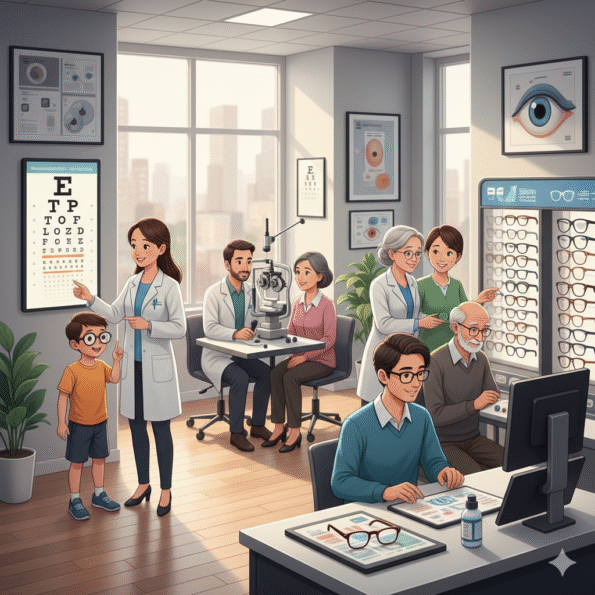
Your eyes are more than just windows to the world — they’re windows to your health. Many people assume that eye exams are only necessary every year or two, but sometimes your eyes send signals that shouldn’t be ignored. Catching potential issues early can prevent discomfort, worsening vision, and even serious health problems. Here’s how to recognize when you might need an eye exam sooner than scheduled.
1. Blurred or Distorted Vision

If you suddenly notice difficulty focusing on objects, blurred distance vision, or wavy lines, it’s a clear sign that your vision may be changing. These symptoms could indicate nearsightedness, farsightedness, astigmatism, or even more serious conditions like cataracts or retinal problems.
Tip: Don’t wait for your next routine checkup — schedule an eye exam promptly.
2. Frequent Headaches or Eye Strain

Experiencing regular headaches, especially after reading, working on a computer, or driving, could be a symptom of eye strain. Eye strain can occur from uncorrected vision problems or prolonged screen time.
Tip: Adjust your workspace lighting, practice the 20-20-20 rule (every 20 minutes, look at something 20 feet away for 20 seconds), and book an eye exam to check your prescription.
3. Difficulty Seeing at Night or in Low Light

Struggling to drive at night, noticing halos around lights, or experiencing glare can indicate early cataracts or changes in your lens. These issues shouldn’t be ignored as they can impact your safety.
Tip: Night vision problems are a red flag — an eye professional can detect underlying causes and recommend corrective lenses or treatment.
4. Double Vision or Eye Misalignment

Seeing double or noticing that your eyes don’t seem to work together can be a sign of strabismus, nerve issues, or even neurological conditions. Immediate evaluation is recommended to prevent long-term complications.
5. Sudden Floaters, Flashes, or Loss of Vision
If you suddenly notice small floating spots, flashes of light, or partial loss of vision, these could signal retinal detachment or other urgent eye problems.
Tip: This is a medical emergency. Seek an eye care professional immediately — early treatment can save your vision.
6. Dry, Irritated, or Red Eyes

Persistent dryness, redness, or itching might indicate dry eye syndrome, allergies, or infections. Chronic irritation can affect comfort and visual clarity, so it’s important to get an eye exam for proper diagnosis and treatment.
7. Changes in Color Perception or Peripheral Vision

Difficulty distinguishing colors, noticing dimming of your vision, or losing peripheral vision may be early warning signs of glaucoma or optic nerve issues. Detecting these problems early can help prevent irreversible vision loss.